No products in the cart.
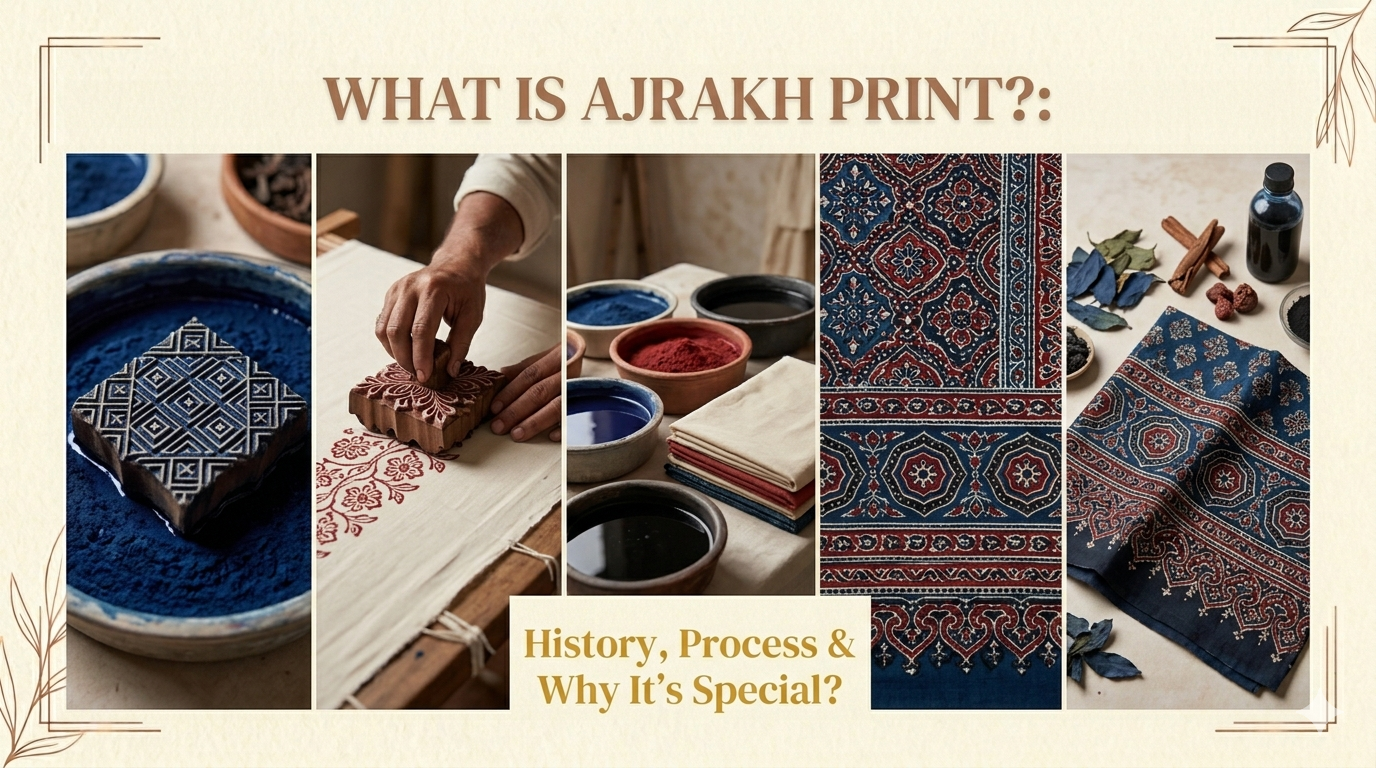

In a world of fast fashion, handcrafted textiles hold a charm that never fades. One such timeless art is Ajrakh print—a centuries-old block printing technique known for its intricate patterns and rich natural colors. Rooted deeply in Indian heritage, Ajrakh is more than just a fabric design; it’s a story of culture, craftsmanship, and sustainability.
If you love ethnic wear that blends tradition with elegance, Ajrakh-printed kurtis—especially in luxurious fabrics like Mashroo silk—are a must-have. Let’s explore what makes Ajrakh print so unique and why it continues to be cherished across generations.
Ajrakh print traces its roots back over 4,000 years, with evidence found in the Indus Valley Civilization. Today, it is primarily practiced in regions of Kutch (Gujarat) and parts of Rajasthan.
The word Ajrakh is believed to have originated from “Azrak,” meaning blue in Arabic, reflecting the deep indigo shades traditionally used in this art.
Ajrakh has long been associated with:
Each design carries a sense of balance and symmetry, representing harmony in nature.
Ajrakh is not just printing—it’s a meticulous, multi-step craft that can take up to 2–3 weeks to complete a single piece.
The fabric (often cotton or silk) is thoroughly washed to remove impurities and ensure proper dye absorption.
Ajrakh uses natural dyes derived from:
This makes it eco-friendly and skin-safe.
Artisans use intricately carved wooden blocks to stamp patterns onto the fabric. Each color requires a separate block, making precision essential.
A special resist paste is applied to preserve certain areas while dyeing others, creating the signature layered look.
The fabric undergoes multiple cycles of dyeing, washing, and sun-drying to achieve depth and richness in color.
Ajrakh stands apart from modern prints due to its craftsmanship and authenticity.
When paired with premium fabrics like Mashroo silk, Ajrakh designs gain an added layer of luxury and comfort.
Mashroo silk is a traditional fabric known for its smooth, satin-like finish on the outside and breathable cotton feel on the inside. This makes it perfect for Indian weather while maintaining a rich appearance.
Ajrakh-printed Mashroo silk kurtis beautifully merge heritage artistry with modern wearability.
Ajrakh prints are versatile and easy to style for different occasions.
In today’s era of machine-made fashion, choosing handcrafted clothing supports both artisans and sustainable practices.
Investing in Ajrakh is not just about style—it’s about preserving a legacy.
Ajrakh print is more than a textile design—it’s a reflection of India’s rich artistic heritage. From its ancient origins to its intricate handcrafting process, every Ajrakh piece tells a story of dedication and skill.
When combined with luxurious fabrics like Mashroo silk, it creates timeless kurtis that offer both elegance and comfort. Whether you’re dressing for a festive occasion or elevating your everyday ethnic style, Ajrakh is always a meaningful choice.



Leave a comment