No products in the cart.
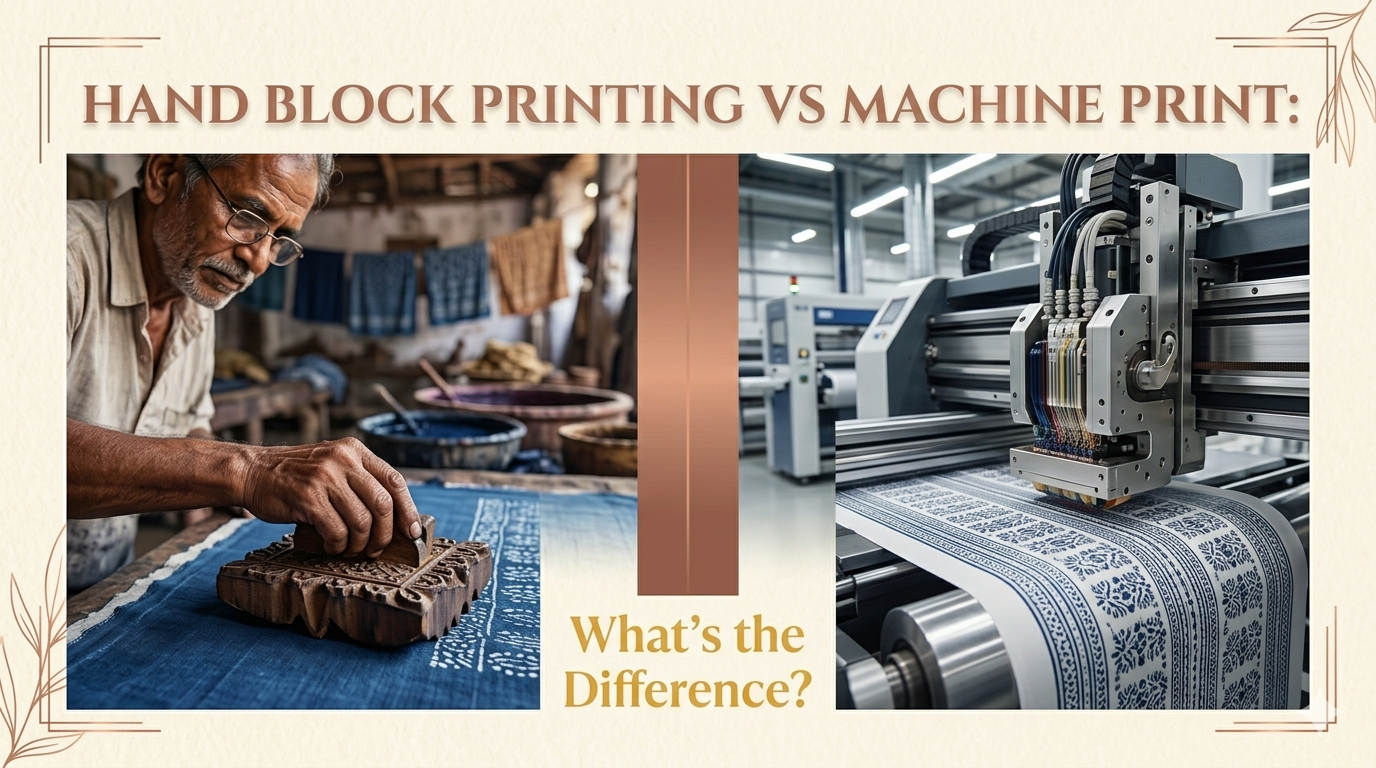

In today’s fast-paced fashion world, it’s easy to get drawn to visually appealing prints without knowing how they’re made. But when it comes to ethnic wear, the technique behind the fabric can significantly impact its quality, feel, and uniqueness. This is where understanding Hand Block Printing becomes important.
From intricate Ajrakh prints crafted by skilled artisans to mass-produced machine prints, each method tells a different story. If you’re someone who values authenticity, comfort, and craftsmanship—especially in fabrics like Mashroo silk kurtis—knowing the difference can help you make better style choices.
Let’s break down how these two printing techniques differ and why it matters for your wardrobe.
Hand block printing is a traditional textile art where patterns are stamped onto fabric using hand-carved wooden blocks.
This process requires precision, patience, and years of expertise.
Ajrakh printing is one of the most celebrated forms of hand block printing in India. Known for its geometric patterns and natural dyes, it reflects a rich cultural heritage and meticulous craftsmanship.
Machine printing is a modern, automated process used to produce large quantities of printed fabric quickly.
While efficient, machine printing lacks the human touch that defines handcrafted textiles.
Understanding the differences can help you identify quality and authenticity when shopping for ethnic wear.
Hand Block Printing:
Machine Print:
Hand Block Printing:
Machine Print:
Handcrafted Fabrics:
Machine-Printed Fabrics:
Hand Block Printing:
Machine Print:
Hand Block Printing:
Machine Print:
Ajrakh prints are a perfect example of why handcrafted textiles are so special.
When these prints are applied to fabrics like Mashroo silk, they create kurtis that are both luxurious and comfortable—ideal for modern ethnic wear.
If you’re shopping for kurtis and want to identify authentic hand block prints, here are some simple tips:
These small details can help you distinguish true craftsmanship from mass production.
While both styles can look beautiful, handcrafted kurtis often offer more versatility and elegance.
Handcrafted pieces naturally elevate your outfit, making them suitable for both casual and special occasions.
Choosing handcrafted clothing is about more than just fashion—it’s about making conscious choices.
When you invest in handcrafted Ajrakh and Mashroo silk kurtis, you’re choosing quality, heritage, and timeless style.
The difference between hand block printing and machine print goes beyond appearance—it lies in craftsmanship, quality, and cultural value. While machine prints offer convenience, handcrafted techniques like Ajrakh printing bring authenticity, uniqueness, and a deeper connection to tradition.
When combined with luxurious yet comfortable fabrics like Mashroo silk, handcrafted kurtis become wardrobe staples that stand the test of time.



Leave a comment